Skip to main menu Skip to main content Skip to footer

Retina


What is the Retina?

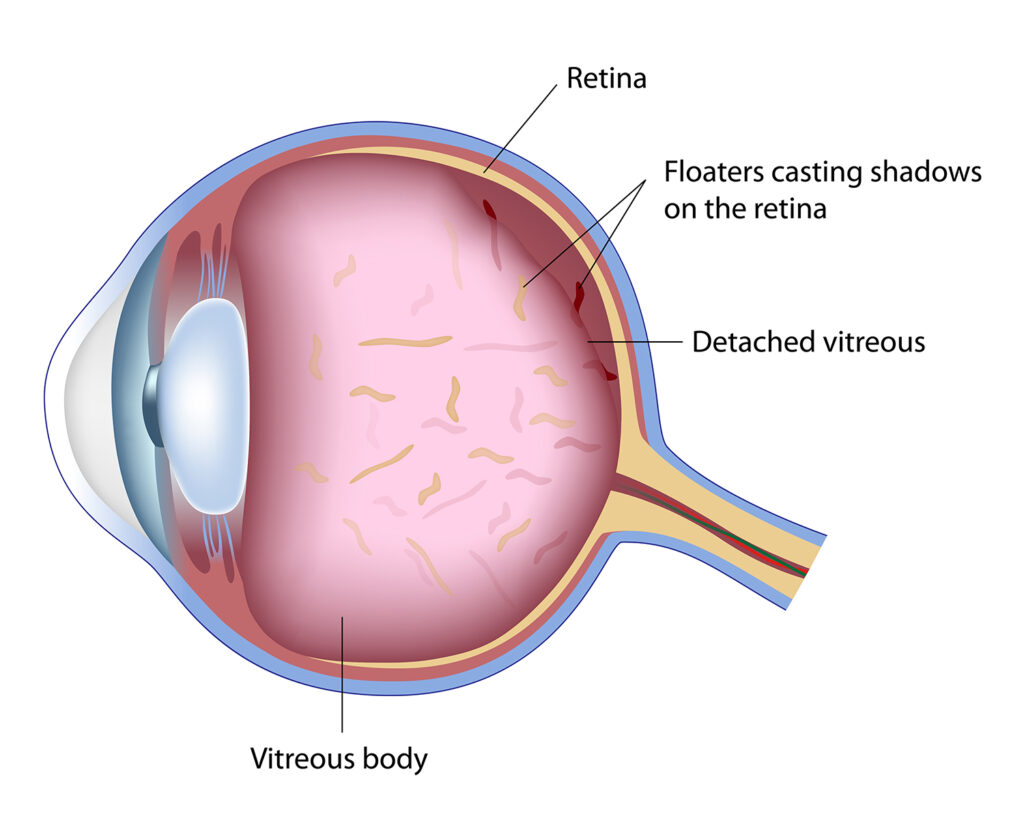
The retina is the lining of the eye inside the eyeball. It is the neural electric tissue that registers light waves and converts them to neural signals that transmit images to the brain. Therefore a healthy functioning retina is essential for good vision. The vitreous is a gel like substance that fills the inner eyeball and is attached to the retina.


Floaters

The most common complaint relating to the retina and vitreous is floaters. Floaters cause a variety of symptoms but usually they are described as black lines or spots floating in the vision. Often patients will describe a mosquito or hair in the vision. This occurs spontaneously or after some type of minor trauma. They are actually areas where the vitreous becomes condensed or detached from the retina forming actual floaters in the eye which are then perceived as dark spots. This is a benign condition and, while annoying, usually does not require any procedural treatment. However, floaters can occasionally be associated with other diseases such as retinal tears or detachment, hemorrhage or inflammation. For this reason, any new floaters should be evaluated immediately by an ophthalmologist.

Other common diseases of the retina include diabetic retinopathy which is discussed in the section of diabetes and the eye. Blocked blood vessels can also occur and usually present with acute loss of vision. This sometimes requires treatment with a laser. Retinal tears and detachment may not have symptoms at all but oftentimes present with floaters, flashes and/or loss of vision. Symptomatic retinal tears can usually be treated in the office with a painless laser procedure. Retinal detachment usually requires surgical intervention and, if treated early, can yield very good vision after treatment.

Macular Degeneration

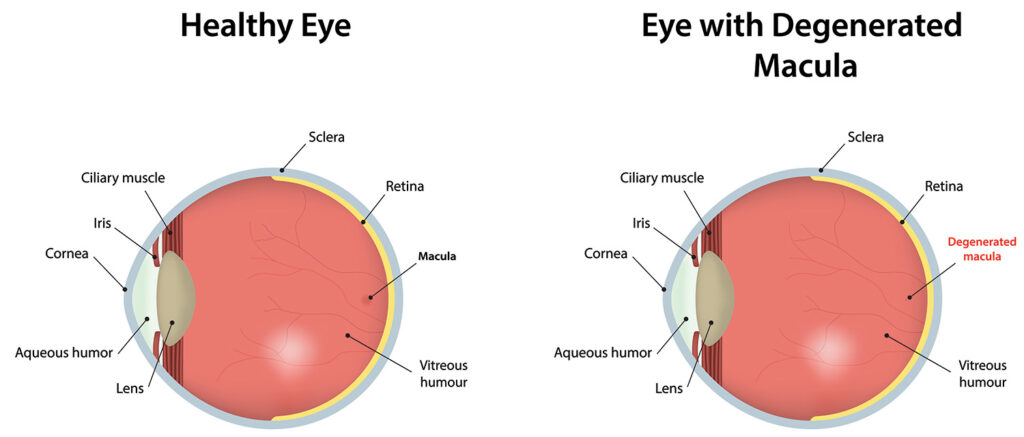
One of the most common retinal diseases is age-related macular degeneration. This, as the name implies, is an age related change in the macula which is the central part of the retina and the area of the retina that allows for reading, recognizing faces and focusing on objects. Most cases of macular degeneration are mild and require no treatment. It has been shown that the progression from early dry macular degeneration can be abated by a few behavioral changes. Quitting smoking and controlling blood pressure are helpful. Certain types of nutritional supplementation have also been shown to help. There are many commercial products on the market designed for this. Your ophthalmologist at Gary S. Hirshfield MD Eye Physician and Surgeon in New Hyde Park can help you choose the right product for your condition.

In recent years there has been a major breakthrough in the treatment of wet forms of macular degeneration. These are drugs that are injected into the vitreous of the eye and in some cases restore or improve vision that would have otherwise been lost. The bottom line about macular degeneration is that, unlike in the past, we now have several modalities for slowing the rate of progression and maintaining or even restoring vision. Only with the proper evaluation and diagnosis can the correct therapy be chosen. Gary S. Hirshfield MD Eye Physician and Surgeon in New Hyde Park is thoroughly experienced in diagnosing and choosing the correct treatment for macular degeneration or any other retinal disease.

Dr. Hirshfield is proud to announce that he is no longer affiliated with Northwell Physician Partners but has now joined Optum.  His new office location is:

2 Ohio Drive, Suite 200
New Hyde Park, NY 11042
347-229-1350

Appointments will be opening at the beginning of March 2025.  Please enter your contact information and we will contact you to prioritize your visit. 

In the mean time request your record from:
Northwell Health Physician Partners
176-60 Union Turnpike, Suite 110
Fresh Meadows, NY 11366

or call 718-460-1200 for your records. You can also download the following application for android or iphone.

You can then make an account with Epic Mychart and be able to share your chart with any other provider. You will have the opportunity to share your chart with Dr. Hirshfield or other providers electronically.

Please also enter your contact information in our contact page and we will reach out to you when the appointment booking becomes active.